

If you’re studying O-Level Pure Physics, you’ve probably noticed how much time the syllabus spends on Mechanics and Newton’s laws. These ideas form the base of the subject, and understanding them can make a big difference in how you handle the course. But why exactly do Mechanics and Newton’s Laws matter so much? We’ll look at its role in the syllabus and how it ties into daily life. Whether you’re a student preparing for O-Levels or a parent helping out, knowing this can help you see the value in focusing on these topics early.
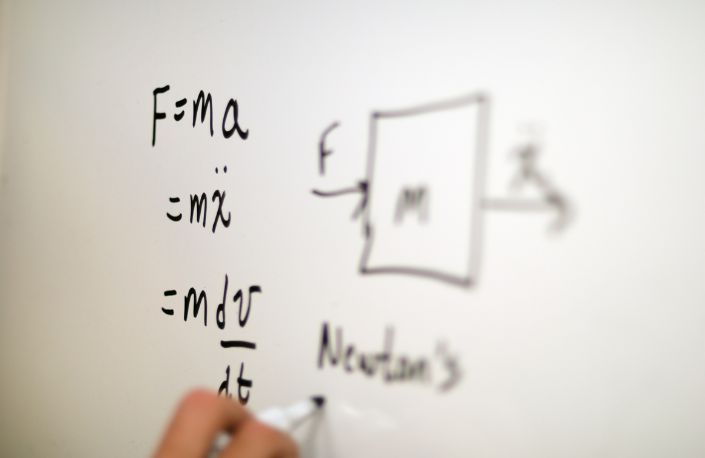
The Foundation of Physics
Mechanics is the starting point in the O-Level Physics syllabus. It sets up everything that comes after, like forces, energy, work, power, and momentum. Without a good grasp of Mechanics, jumping into those other areas feels disconnected and overwhelming.
Newton’s laws are at the heart of Mechanics, they explain how things move in the real world. For example, describes inertia—the tendency of objects to resist changes in motion. This principle underpins real-world applications like vehicle safety features and transportation systems. This simple rule shows up in transport systems and even in how engineers build structures. Getting these basics right early on makes the whole subject approachable and interconnected.

High Weightage in Exams
The most compelling reason to prioritize Mechanics in O-Level Pure Physics is its significant exam weightage.
- Questions on Mechanics and Newton’s Laws appear across all papers: Paper 1 (Multiple Choice), Paper 2 (Structured Questions), and even Paper 3 (School-Based Practical Assessment, or SPA).
- This topic accounts for 15–25% of the total exam content typically.
- You’ll encounter calculation-heavy problems involving forces, motion, graphs.
- Practical experiments, such as using ticker tape timers or dynamics trolleys to demonstrate acceleration, are frequently tested in SPA.
Ignoring Mechanics means missing out on these scoring opportunities, which can drag down your overall grade.
Linkage Across Topics
Newton’s Laws don’t exist in isolation—they weave through the entire O-Level Pure Physics syllabus, creating vital connections.
- Kinematics: Interpret motion graphs, velocity, acceleration.
- Work, Energy & Power: Apply force and displacement.
- Turning Effects of Forces: Understanding equilibrium and moments.
- Pressure: force divided by area.
- Waves & Electricity: Analogy of force vs voltage.
Failing to master Newton’s Laws early on can create roadblocks in these areas, turning O-Level Physics into a frustrating puzzle rather than a logical progression.
Critical Thinking & Problem-Solving
Mechanics fosters essential skills for success in O-Level Pure Physics and beyond. It trains students in logical analysis, such as interpreting displacement-time or velocity-time graphs to solve real problems.
Key skills developed include:
- Breaking down forces into vector components for accurate calculations.
- Applying equations of motion under various constraints, like friction or inclined planes.
- Structured thinking that benefits not just Physics but also Mathematics and Sciences.
By practicing mechanics, you get better at analyzing problems and finding clear solutions, which helps you score well and prepares you for more advanced topics.

Real-Life Applications
What makes Mechanics and Newton’s Laws truly engaging for O-Level students is their relevance to everyday life! For instance:
- In transportation, seatbelts and airbags rely on Newton’s First Law to protect passengers during sudden stops. Train braking systems use friction and momentum to ensure safety.
- Sports enthusiasts will appreciate how sprinters lean forward to overcome inertia or why a football curves mid-air due to forces.
- In engineering, these principles drive designs for bridges, roller coasters, robotics, and drones.
By connecting O-Level Pure Physics to the real world, Mechanics transforms the subject from dry theory into something vibrant and applicable, sparking curiosity and motivation.
Scoring Opportunities
Mechanics questions in O-Level exams follow predictable patterns, offering reliable ways to rack up marks:
- Newton’s 1st: balanced forces, inertia.
- Newton’s 2nd: F = ma applications.
- Newton’s 3rd: action-reaction pairs.
Students who drill the basics can secure these “easy” points early, building momentum for the rest of the paper. This early confidence boost often leads to better overall performance, turning Mechanics into a strategic advantage.
Preparation for A-Level & Beyond
Looking ahead, mastering Mechanics at O-Level sets the stage for A-Level H2 Physics, where topics like circular motion, dynamics, and simple harmonic motion (SHM) build directly on Newtonian principles. Careers in engineering, computing, and STEM fields all hinge on these foundations.
Starting strong at O-Level means less struggle later. It opens doors to STEM fields where these concepts keep showing up.
Mechanics and Newton’s laws are the core of O-Level Physics. They hold a big exam weight, tie into many topics, and help develop skills for solving real problems. Students who get good at Mechanics do better in O-Levels and lay groundwork for A-Levels and STEM careers.
Ready to improve your Physics skills? Sign up for our November revision sessions or weekly lessons at MindQuest Learning Hub today. Spots fill up fast—sign up a trial lesson to get started!